The Most Important Vital Sign Your Doctor Isn't Checking
Why VO₂ Max is a better predictor of your lifespan than cholesterol, blood pressure, or BMI.
The 'Lagging Indicator' Problem
If you go to a standard annual physical in Seattle, your doctor will likely check your "dashboard lights." They will measure your cholesterol, your blood pressure, and your fasting glucose.
These are important metrics. But they are lagging indicators.
By the time your blood pressure is high, the damage is already done. By the time your glucose is out of range, you are already metabolically sick. You are managing decline, not optimizing health.
To actually predict—and change—your future, you need a leading indicator.
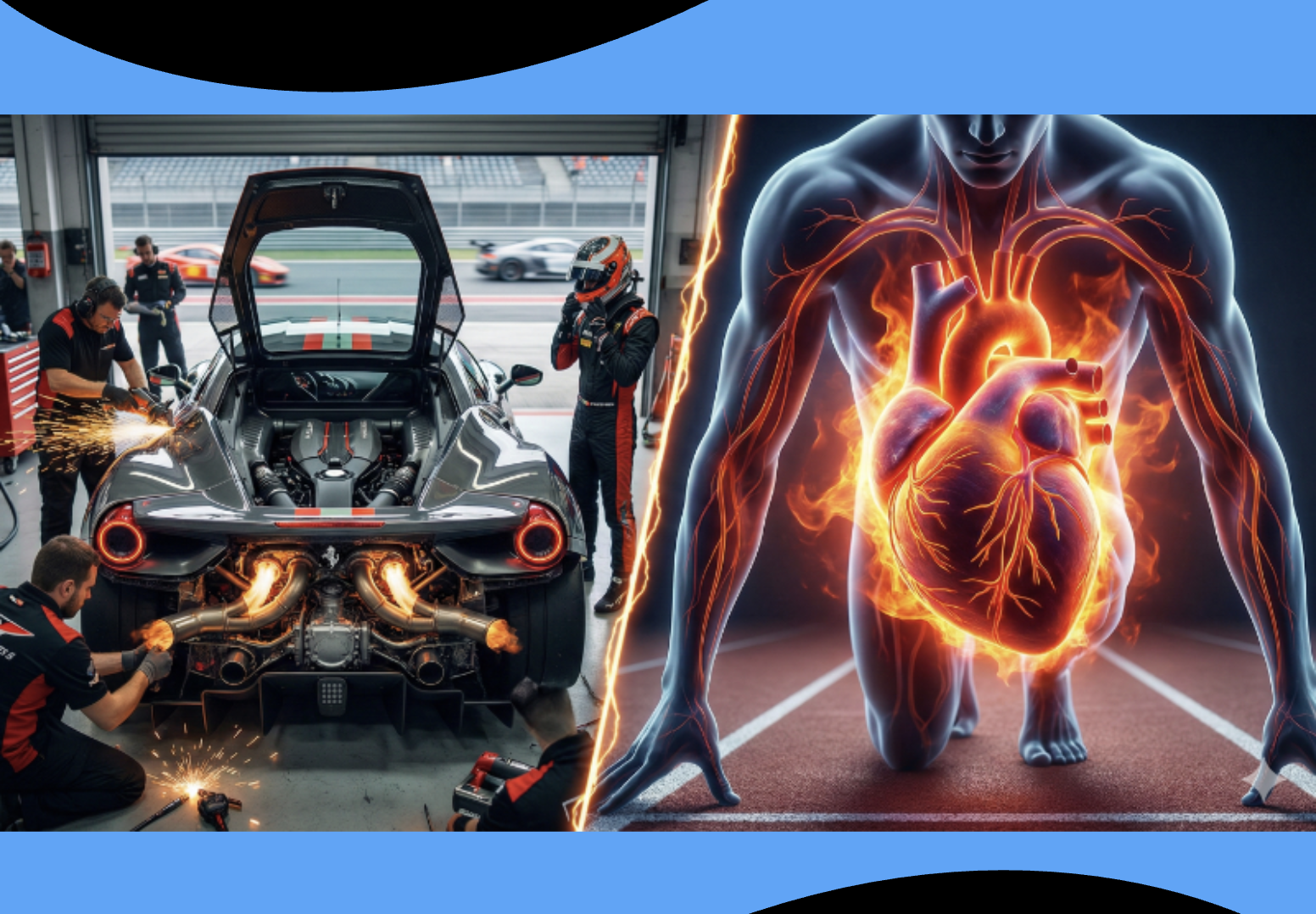
You need to measure the size of your engine.
The Horsepower of Longevity
In the world of physiology, the size of your engine is measured by VO₂ Max.
Technically, it is the maximum amount of oxygen your body can utilize during intense exercise. But practically, it is a measurement of your functional capacity. It tells us how efficiently your heart, lungs, and mitochondria can turn air into energy.
For decades, we thought this was just for elite athletes. We were wrong.
Recent clinical data is crystal clear: VO₂ Max is the single strongest predictor of all-cause mortality.
It is more predictive than smoking history.
It is more predictive than high cholesterol.
It is more predictive than diabetes.
Moving from "low fitness" to "above average fitness" can effectively cut your risk of death in a given year by half. There is no drug on the planet that can offer that kind of return on investment.
Don't Put a Ferrari Engine in a Honda Civic
This is where most people get it wrong. They read about VO₂ Max, they get excited, and they start doing high-intensity intervals to boost their score.
But biology is a system, not a single metric.
A massive engine (High VO₂ Max) creates massive stress. If you drop that engine into a weak frame, something is going to break.
At DexaFit Seattle, we don't just measure the engine. We audit the whole machine using a three-part framework:
1. The Engine (VO₂ Max)
Your horsepower. This measures your aerobic ceiling and cardiovascular potential.
2. The Chassis (DEXA Scan)
Your structural integrity. Do you have enough lean muscle mass and bone density to handle the output of your engine? (Learn more about our DEXA Body Composition scans here).
3. The Fuel (RMR Test)
Your efficiency. Are you burning the right fuel mixture (fats vs. carbs) to keep the engine running without burnout?
We often see "The Fragile Athlete"—someone with a VO₂ Max of 55 (Elite) but dangerously low bone density and muscle mass. They are fast, but they are fragile.
True longevity requires balance.
The Protocol: Stop Guessing
You cannot improve what you do not measure.
If you are relying on your Apple Watch or Garmin to estimate your VO₂ Max, you are guessing. Wearables use algorithms based on pace and heart rate; they do not measure gas exchange. They can be off by 15-20% compared to clinical-grade testing.
To build a real longevity plan, you need clinical data.
Establish Your Baseline: Book a VO₂ Max test to find your true biological age and training zones.
Audit Your Chassis: Pair it with a DEXA scan to ensure your muscle mass is keeping up with your cardio.
Train the System: Use your precise heart rate zones to build a bigger engine without breaking the chassis.
Your heart beats 100,000 times a day. You owe it to yourself to make sure it's efficient.
References: